Weather Alert in Pennsylvania
Snow Squall Warning issued February 6 at 10:50PM EST until February 7 at 12:15AM EST by NWS State College PA
AREAS AFFECTED: Cambria, PA; Somerset, PA
DESCRIPTION: The National Weather Service in State College PA has issued a * Snow Squall Warning for... Southwestern Cambria County in central Pennsylvania... Somerset County in south central Pennsylvania... * Until 1215 AM EST. * At 1048 PM EST, a dangerous snow squall was located along a line extending from Westmont to Mount Pleasant to Charleroi, moving southeast at 40 mph. HAZARD...Intense bursts of heavy snow. Gusty winds leading to blowing snow and visibility rapidly falling to less than one-quarter mile. Wind gusts greater than 40 mph. SOURCE...Radar indicated. IMPACT...Travel will become difficult and potentially dangerous within minutes. This includes The Pennsylvania Turnpike from mile markers 100 to 130. This includes the following highways... Route 30 from the Westmoreland county line to east of Indian Lake. Route 40 from near Somerfield to Addison. Route 219 from the Maryland border to near South Fork. State Road 56 from the Westmoreland County line to Johnstown. The Johnstown Expressway. This snow squall will be near... Westmont, Belmont, and Johnstown around 1050 PM EST. Windber, Scalp Level, and Daisytown around 1100 PM EST. Somerset, Central City, and New Centerville around 1110 PM EST. Ogletown around 1120 PM EST. Mount Davis, Ursina, and Berlin around 1130 PM EST. Other locations impacted by this snow squall include Benson, Addison, Elim, Stoystown, and Indian Lake.
INSTRUCTION: Consider avoiding or delaying travel until the snow squall passes your location. If you must travel, use extra caution and allow extra time. Rapid changes in visibility and slick road conditions may lead to accidents.
Want more detail? Get the Complete 7 Day and Night Detailed Forecast!
Current U.S. National Radar--Current
The Current National Weather Radar is shown below with a UTC Time (subtract 5 hours from UTC to get Eastern Time).

National Weather Forecast--Current
The Current National Weather Forecast and National Weather Map are shown below.

National Weather Forecast for Tomorrow
Tomorrow National Weather Forecast and Tomorrow National Weather Map are show below.

North America Water Vapor (Moisture)
This map shows recent moisture content over North America. Bright and colored areas show high moisture (ie, clouds); brown indicates very little moisture present; black indicates no moisture.

Weather Topic: What are Nimbostratus Clouds?
Home - Education - Cloud Types - Nimbostratus Clouds
 Next Topic: Precipitation
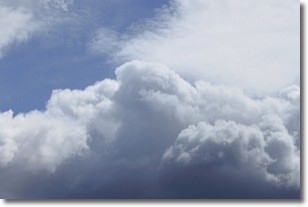
A nimbostratus cloud is similar to a stratus cloud in its formless,
smooth appearance. However, a nimbostratus cloud is darker than a stratus cloud,
because it is thicker.
Unlike a stratus cloud, a nimbostratus cloud typically brings with it the threat
of moderate to heavy precipitation. In some cases, the precipitation may evaporate
before reaching the ground, a phenomenon known as virga.
Next Topic: Precipitation
Weather Topic: What is Rain?
Home - Education - Precipitation - Rain
 Next Topic: Shelf Clouds
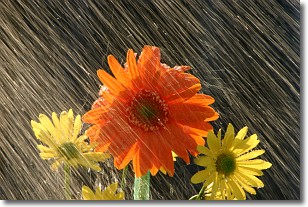
Precipitation in the form of water droplets is called rain.
Rain generally has a tendency to fall with less intensity over a greater period
of time, and when rainfall is more severe it is usually less sustained.
Rain is the most common form of precipitation and happens with greater frequency
depending on the season and regional influences. Cities have been shown to have
an observable effect on rainfall, due to an effect called the urban heat island.
Compared to upwind, monthly rainfall between twenty and forty miles downwind of
cities is 30% greater.
Next Topic: Shelf Clouds
Current conditions powered by WeatherAPI.com