Weather Alert in Iowa
Winter Storm Watch issued March 14 at 3:06AM CDT until March 16 at 10:00AM CDT by NWS Des Moines IA
AREAS AFFECTED: Pocahontas; Humboldt; Wright; Franklin; Butler; Bremer; Sac; Calhoun; Webster; Hamilton; Hardin; Grundy; Black Hawk; Crawford; Carroll; Greene; Boone; Story; Marshall; Tama; Audubon; Guthrie; Dallas; Polk; Jasper; Poweshiek
DESCRIPTION: ...POTENTIAL WINTER STORM PRODUCING BLIZZARD CONDITIONS LATE SATURDAY NIGHT THROUGH SUNDAY NIGHT... .A potentially significant winter storm will impact parts of the Upper Midwest this weekend, mainly from late Saturday night through Sunday night, with lingering impacts from blowing snow lasting into Monday morning. A swath of heavy snowfall and strong winds may result in blizzard conditions and significant impacts, especially on Sunday. A brief period of freezing rain is possible Sunday morning prior to switching over to snow. There is still some uncertainty in how far south into Iowa the heaviest snowfall may occur, but the most likely areas to see the higher snowfall amounts are over northern Iowa, though blizzard conditions are possible with lesser snow extending down into south central Iowa. * WHAT...Mixed precipitation followed by blizzard conditions possible. Total snow accumulations between 3 and 6 inches and ice accumulations around a light glaze possible. Winds could gust as high as 55-60 mph. * WHERE...Portions of central into north central Iowa. * WHEN...From Sunday morning through Monday morning. * IMPACTS...Plan on slippery road conditions. Widespread blowing snow could significantly reduce visibility. The hazardous conditions could impact the Monday morning commute. Strong winds could cause tree damage.
INSTRUCTION: Prepare for possible blizzard conditions. Continue to monitor the latest forecasts for updates on this situation.
Want more detail? Get the Complete 7 Day and Night Detailed Forecast!
Current U.S. National Radar--Current
The Current National Weather Radar is shown below with a UTC Time (subtract 5 hours from UTC to get Eastern Time).

National Weather Forecast--Current
The Current National Weather Forecast and National Weather Map are shown below.

National Weather Forecast for Tomorrow
Tomorrow National Weather Forecast and Tomorrow National Weather Map are show below.

North America Water Vapor (Moisture)
This map shows recent moisture content over North America. Bright and colored areas show high moisture (ie, clouds); brown indicates very little moisture present; black indicates no moisture.

Weather Topic: What are Contrails?
Home - Education - Cloud Types - Contrails
 Next Topic: Cumulonimbus Clouds
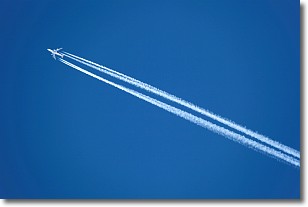
A contrail is an artificial cloud, created by the passing of an
aircraft.
Contrails form because water vapor in the exhaust of aircraft engines is suspended
in the air under certain temperatures and humidity conditions. These contrails
are called exhaust contrails.
Another type of contrail can form due to a temporary reduction in air pressure
moving over the plane's surface, causing condensation.
These are called aerodynamic contrails.
When you can see your breath on a cold day, it is also because of condensation.
The reason contrails last longer than the condensation from your breath is
because the water in contrails freezes into ice particles.
Next Topic: Cumulonimbus Clouds
Weather Topic: What are Cumulus Clouds?
Home - Education - Cloud Types - Cumulus Clouds
 Next Topic: Drizzle
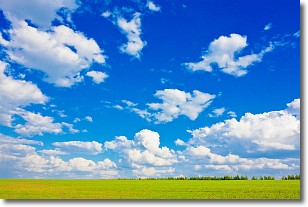
Cumulus clouds are fluffy and textured with rounded tops, and
may have flat bottoms. The border of a cumulus cloud
is clearly defined, and can have the appearance of cotton or cauliflower.
Cumulus clouds form at low altitudes (rarely above 2 km) but can grow very tall,
becoming cumulus congestus and possibly the even taller cumulonimbus clouds.
When cumulus clouds become taller, they have a greater chance of producing precipitation.
Next Topic: Drizzle
Current conditions powered by WeatherAPI.com