Weather Alert in Kansas
High Wind Watch issued February 15 at 1:24AM CST until February 17 at 6:00PM CST by NWS Goodland KS
AREAS AFFECTED: Thomas; Logan; Wichita
DESCRIPTION: * WHAT...For the Dense Fog Advisory, visibility around one quarter mile in dense fog. For the High Wind Watch, southwest winds 25 to 35 mph with gusts up to 60 mph possible. * WHERE...Thomas, Logan, and Wichita Counties. * WHEN...For the Dense Fog Advisory, until 9 AM CST this morning. For the High Wind Watch, from Tuesday morning through Tuesday afternoon. * IMPACTS...High winds may move loose debris, damage property and cause power outages. Travel could be difficult, especially for high profile vehicles. Plumes of blowing dust will create pockets of low visibility. Visibilities will likely change rapidly over short distances, making travel hazardous in these areas. Low visibility could make driving conditions hazardous.
INSTRUCTION: Monitor the latest forecasts and warnings for updates. Fasten loose objects or shelter objects in a safe location prior to the onset of winds. Winds this strong can make driving difficult, especially for high profile vehicles. Use extra caution. Blowing dust can significantly lower air quality and it is encouraged that you take preventative measures such as staying indoors or wearing protective breathing masks if outside. High dust concentrations can cause respiratory problems, decrease lung activity, aggravate asthma, and lead to potential heart-related problems, especially with children, elderly or those with pre-existing respiratory conditions. If driving, slow down, use your headlights, and leave plenty of distance ahead of you. Sidewalks, porches, steps, and driveways will become slippery. Pedestrians should use caution when moving about.
Want more detail? Get the Complete 7 Day and Night Detailed Forecast!
Current U.S. National Radar--Current
The Current National Weather Radar is shown below with a UTC Time (subtract 5 hours from UTC to get Eastern Time).

National Weather Forecast--Current
The Current National Weather Forecast and National Weather Map are shown below.

National Weather Forecast for Tomorrow
Tomorrow National Weather Forecast and Tomorrow National Weather Map are show below.

North America Water Vapor (Moisture)
This map shows recent moisture content over North America. Bright and colored areas show high moisture (ie, clouds); brown indicates very little moisture present; black indicates no moisture.

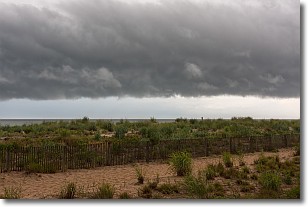
Weather Topic: What are Shelf Clouds?
Home - Education - Cloud Types - Shelf Clouds
 Next Topic: Sleet
A shelf cloud is similar to a wall cloud, but forms at the front
of a storm cloud, instead of at the rear, where wall clouds form.
A shelf cloud is caused by a series of events set into motion by the advancing
storm; first, cool air settles along the ground where precipitation has just fallen.
As the cool air is brought in, the warmer air is displaced, and rises above it,
because it is less dense. When the warmer air reaches the bottom of the storm cloud,
it begins to cool again, and the resulting condensation is a visible shelf cloud.
Next Topic: Sleet
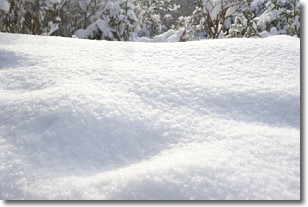
Weather Topic: What is Snow?
Home - Education - Precipitation - Snow
 Next Topic: Stratocumulus Clouds
Snow is precipitation taking the form of ice crystals. Each ice crystal, or snowflake,
has unique characteristics, but all of them grow in a hexagonal structure.
Snowfall can last for sustained periods of time and result in significant buildup
of snow on the ground.
On the earth's surface, snow starts out light and powdery, but as it begins to melt
it tends to become more granular, producing small bits of ice which have the consistency of
sand. After several cycles of melting and freezing, snow can become very dense
and ice-like, commonly known as snow pack.
Next Topic: Stratocumulus Clouds
Current conditions powered by WeatherAPI.com